How to Plan a Group Backpacking Trip (Without Losing Your Mind)
You've got six friends who are "definitely in." You've got a shared Google Doc that three people have edited and two haven't opened. You've got 47 unread messages in a group chat. Sound familiar? Here's a better way.
In this guide
I've organized over a dozen group backpacking trips in the Pacific Northwest, and I can tell you this: the trip itself is almost always amazing. It's the planning that makes people want to quit hiking forever.
The problem isn't that group trips are hard to plan. It's that the information ends up scattered across five different apps, three text threads, and a spreadsheet from 2019 that someone swears they updated. This guide breaks down how to plan a group backpacking trip step by step, and how to keep everyone actually coordinated along the way.
1. Get your group sorted first
Before you pick a trail, figure out who's actually going. This sounds obvious, but the number one trip-planning killer is building plans around people who end up bailing. Set a deadline for commitment; two to three weeks out minimum, and make it clear that a "yes" means a real yes.
Things to figure out early
- Experience levels: A mix of beginners and experienced hikers changes your route options significantly. A 15-mile day with 4,000 feet of elevation gain is fun for some and miserable for others.
- Fitness and pace: Be honest about this. The group moves at the speed of the slowest person, and that's okay, as long as everyone knows it going in.
- Dietary restrictions: Vegetarian, gluten-free, allergies: find out now, not when you're packing food.
- Gear situation: Who has a tent? Who needs to borrow a sleeping pad? Don't assume everyone has a full kit.
💡 Pro tip: In TrailSync, you can invite your crew to a trip and see everyone's experience level, dietary needs, and gear at a glance, before you start planning anything else.
2. Choose the right route
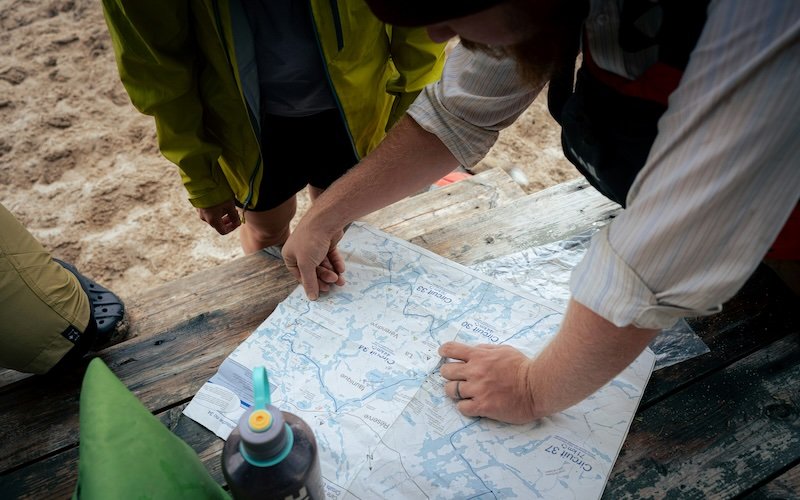
Route selection for a group trip is different from picking a solo hike. You're balancing distance, difficulty, scenery, permit availability, and the weakest link in your group's fitness. Here's what to consider:
- Daily mileage: For a mixed-experience group, plan for 6–10 miles per day max. Add more rest stops than you think you need.
- Water sources: Mark every reliable water source on your route. In late summer, some dry up completely. Check recent trip reports.
- Campsite options: Don't commit to a single campsite with no alternatives. Things happen: someone's slower than expected, weather rolls in, a creek crossing is sketchy. Have backup spots.
- Bail-out points: Especially important with newer hikers. Identify spots where someone could exit the trail if needed.
- Elevation profile: Total mileage is only half the story. A flat 10-mile day and a 10-mile day with 3,500 feet of gain are completely different hikes.
Map out your waypoints: trailhead, campsites, water sources, viewpoints, and bail-out points. Having these visible to the whole group eliminates the "wait, where are we going again?" conversations.
💡 Pro tip: TrailSync's route planner lets you drop waypoints on a map with elevation profiles and distance between segments. Your whole crew can see the plan and it works offline at the trailhead.
3. Split gear without the drama
Group gear is where things get messy fast. Someone brings a stove but forgets fuel. Two people both bring a water filter. Nobody brings a bear canister. The key is clear assignments, visible to everyone.
Group gear to divide up
- Shelter (tent, tarp, footprint)
- Cooking system (stove, fuel, pot, lighter)
- Water treatment (filter, purification tablets)
- First aid kit
- Bear canister or hang kit
- Trowel
- Map and compass (backup to digital)
- Emergency communication (PLB, satellite messenger)
Weight matters
If you're splitting group gear, track the weight. It's not fair if one person is carrying 8 pounds of group gear and another has none. Aim for roughly equal distribution of shared weight on top of everyone's personal kit. Base weight (everything minus food and water) is the number to watch: ultralight hikers aim for under 10 pounds, but for a group trip, 15–20 pounds is realistic.
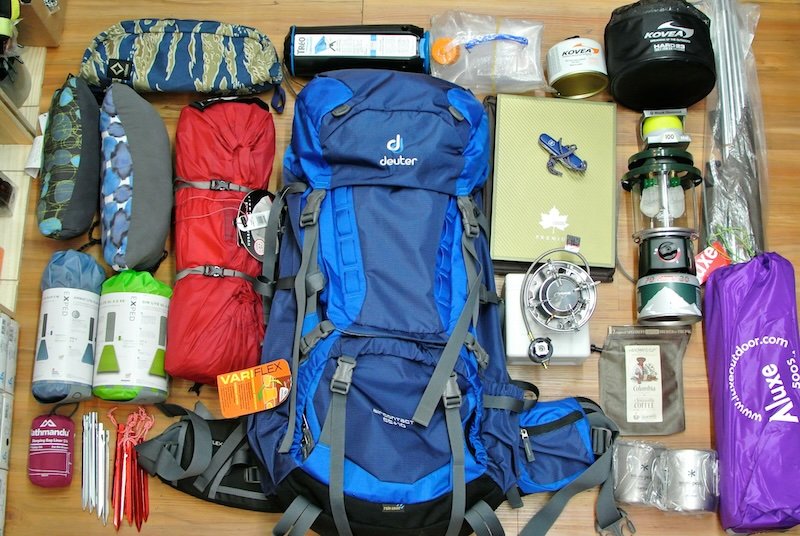
💡 Pro tip: TrailSync has a library of 251+ common backpacking items with weights pre-loaded. Assign items to people, and everyone can see their pack weight and what they're responsible for.
4. Plan meals that actually work
Meal planning for a group trip isn't just "bring your own food." When you're sharing stoves, cook times, and bear canisters, coordination matters. Plus, group meals are one of the best parts of a backpacking trip.
What to think about
- Calories per day: Plan for 2,500–3,500 calories per person depending on mileage and difficulty. You'll burn more than you think.
- Cook vs. no-cook meals: Cold breakfasts (oatmeal soaked overnight, bars) save time in the morning. Hot dinners keep morale high.
- Dietary restrictions: This is where knowing everyone's needs up front saves you. A "everyone eats the same dinner" plan falls apart when someone can't eat gluten.
- Fuel planning: One 4oz canister of isobutane typically lasts about 20, 1-cup boils. For a group of four over three days, bring two canisters.
- Food weight: Aim for 1.5–2 pounds of food per person per day. Dehydrated meals are lighter but more expensive.
💡 Pro tip: TrailSync comes pre-loaded with 131 backpacking recipes with calorie counts, prep times, and dietary tags. Build a day-by-day meal calendar your whole crew can see.
5. Handle money before it gets weird
Nothing ruins a trail friendship faster than unclear money situations. The permit cost $45, gas was $80, someone bought all the food, and now nobody remembers who paid for what.
Typical group trip costs
- Permits (wilderness permits, campsite reservations)
- Transportation (gas, shuttle, parking fees)
- Shared food and fuel
- Gear rentals (if someone needs to rent a bear canister, etc.)
The simplest approach: one person pays, track it, settle up after. But "settle up after" only works if you've actually been tracking who paid what throughout the trip. Doing this in your head or on a napkin doesn't scale past three people.
💡 Pro tip: TrailSync's budget feature lets anyone log expenses with categories and auto-calculates who owes whom. No more awkward Venmo requests three weeks later.
6. Don't forget permits and logistics
Permit systems vary wildly by area. Some are first-come-first-served, some require reservations months in advance, and some have lotteries. Research this early, it can determine your entire trip.
Logistics checklist
- Permits: Check the land management agency (USFS, NPS, BLM) for your specific trail. Many popular areas require overnight permits.
- Trailhead parking: Some trailheads fill up by 7 AM on weekends. Plan your arrival time or arrange a shuttle.
- Transportation: How many cars? Point-to-point trips need a car shuttle or hitchhike plan.
- Emergency contacts: Share your itinerary with someone who's not on the trip. Include expected return time and bail-out procedure.
- Leave No Trace: Pack out all trash, bury human waste 6–8 inches deep and 200 feet from water, and follow fire regulations.
7. Keep everyone on the same page
The biggest failure mode in group trip planning isn't bad routes or forgotten gear: it's communication fragmentation. Half the group is in a text thread, two people are emailing, someone posted an update in a Google Doc that nobody checks, and the trip organizer is slowly losing their mind.
Pick one channel for trip communication and stick to it. Every update, every change, every question goes in one place. If someone asks "what time are we meeting?" in a side text, redirect them.
💡 Pro tip: TrailSync has built-in trip messaging, every conversation is tied to the trip, not buried in a group text with 200 unrelated messages above it.
8. Pre-trip checklist
Here's what should be locked in before anyone packs a bag:
- ☐ Group confirmed with commitment deadline passed
- ☐ Route planned with waypoints, campsites, and water sources
- ☐ Permits secured and shared with group
- ☐ Group gear assigned with weight balanced
- ☐ Meal plan finalized with dietary needs covered
- ☐ Budget tracked with costs logged
- ☐ Transportation sorted (cars, meeting time, parking)
- ☐ Weather checked 3 days before departure
- ☐ Emergency contacts shared and itinerary filed
- ☐ Everyone has offline access to route and plan
Plan your next group trip in one place
TrailSync puts routes, gear, meals, budget, and group chat in one app, so your crew actually shows up prepared. Free during beta.
Join the Free BetaThe bottom line
Group backpacking trips are some of the best experiences you can have outdoors. The sunsets are better when shared, the miles pass faster with conversation, and there's nothing like cooking a hot meal at camp with friends after a long day on trail.
The planning doesn't have to be painful. Get organized early, communicate in one place, assign responsibilities clearly, and you'll spend less time managing logistics and more time enjoying the trail. See you out there. 🥾